In depth
Quanzhou, formerly known as Citong, is located on the southeastern coast of China and is a port city filled with maritime memories, with a history of over 1,300 years. This is the starting point of the ancient Maritime Silk Road, the great eastern port praised by Marco Polo. In 2021, Quanzhou: The World Marine Trade Center of Song-Yuan China was successfully inscribed on the World Heritage List, becoming a World Heritage City with 22 World Heritage sites. In 2024, Quanzhou was selected as a UNESCO City of Gastronomy. The entire city welcomes visitors from all directions with its unique charm of "half city of fireworks, half city of immortals."
Millennia-old relics and the Maritime Silk Road memories
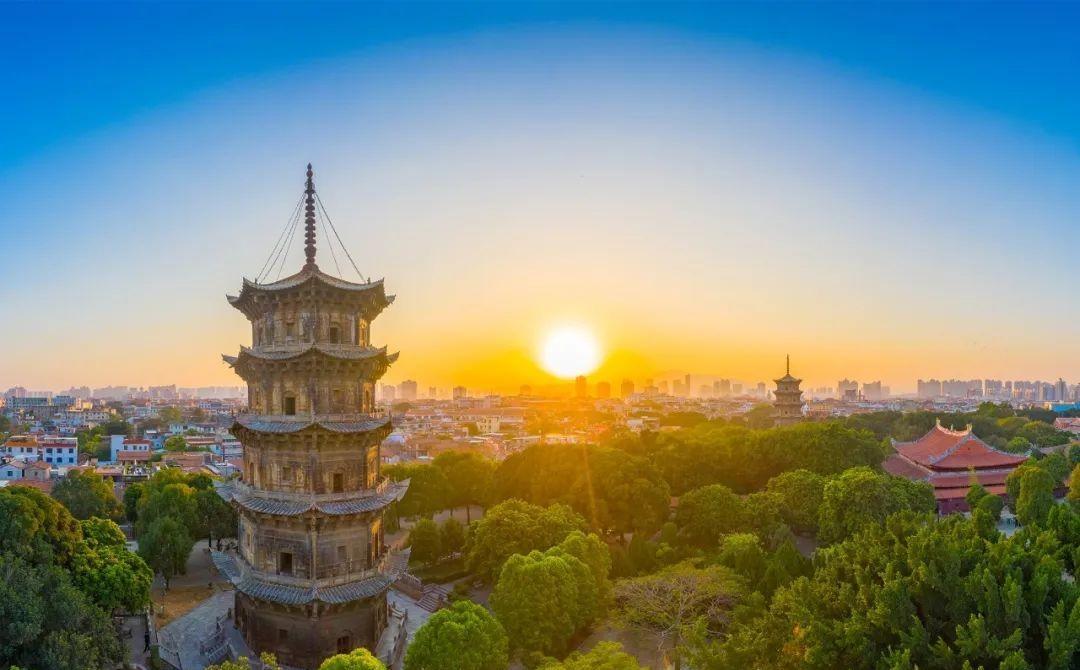
Kaiyuan Temple is the largest Buddhist temple in Fujian Province, originally built in the second year of the Chuigong era of the Tang Dynasty (686 AD). The two Song Dynasty stone pagodas on the east and west sides of the temple are the tallest surviving Song Dynasty stone pagodas in China, representing the highest level of 13th-century Chinese stone pagoda construction techniques. Luoyang Bridge, also known as Wan'an Bridge, is the earliest existing large stone bridge spanning the sea in China. It is renowned as the "Number One Bridge in the Country" and was built under the supervision of Cai Xiang, the governor of Quanzhou in the Northern Song Dynasty. Qingyuan Mountain is a dual heritage site of China's natural and cultural heritage, renowned as "Wuyi in the north, Qingyuan in the south." Jiuri Mountain is the eastern starting point of the Maritime Silk Road. In 1991, UNESCO left stone inscriptions here, confirming Quanzhou's legendary history of representing China in peaceful dialogue with the world.
Museum of World Religions
Quanzhou has a temple every three steps and a hall every five paces, earning it the reputation of the World Museum of Religions. Tianhou Temple is dedicated to the sea goddess Mazu; The Qingjing Mosque is one of the oldest surviving Islamic mosques founded by Arab Muslims in China; There are also Islamic holy tombs and the thatched hermitage of the Mani Guang Buddha statue. The harmonious coexistence of multiple religions paints a grand picture of the ancient coral tree as "people from ten continents in the marketplace, merchants from all nations in the sound of rising seas."
A city of everyday life and gourmet food
Quanzhou West Street gathers many traditional delicacies such as earth bamboo shoot jelly, taro cakes, full pancakes, roasted meat zongzi, and vermicelli porridge. Tusun jelly is made by simmering and condensing starworms growing along the tidal flats, giving it a texture like crystal-clear jelly; Shihuagao is known as the "seabed bird's nest"; Ginger duck and oyster omelette are must-try classics. A bowl of mianxian porridge in the morning, a bite of spring roll late at night—the city's culinary memories are settled in the old shops on every street corner.
Quanzhou, nestled between mountains and sea, is a living fossil engraved with the ancient memories of the Maritime Silk Road. Here, you can enjoy both the glorious maritime trade of the Song and Yuan dynasties, as well as the everyday life of Minnan. From thousand-year-old ancient temples to stone bridges spanning the sea, from diverse religions to local delicacies, Quanzhou is welcoming every visitor by blending tradition with fashion, colliding with history and the future.
Sample route
Quanzhou: 2-3 nights
- The ancient city arrived
- Alleys and historic sites
- Sea breeze and a finishing meal