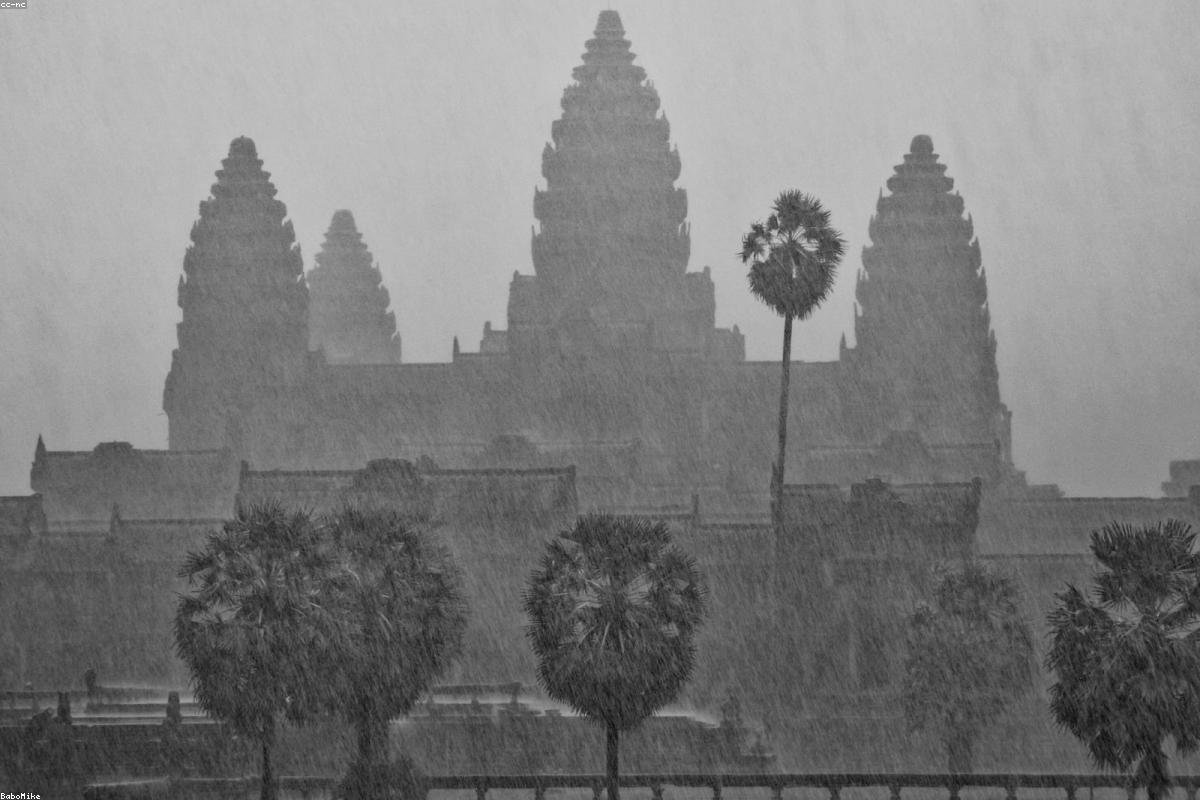
Angkor is a relic of the Khmer Empire and the largest religious complex in the world. Four days and three nights, visit the lost dynasty among smiles and giant trees.
Angkor Wat, with its five corn towers piercing the morning light, is the largest temple in the world. At sunrise, the pond's reflection reflects the stupa shadow, and pilgrims sit on the ground—Cambodia's most sacred scene.
The smiles of the Khmer at Bayon Monastery, and the 49 pagodas are surrounded on all sides by kind faces, said to be the faces of Jayavarman VII. Standing in the stupa forest, surrounded by countless smiling faces, it is both eerie and gentle.
Taburong Temple, where giant tree roots entwine the stone walls, and trees and temples have coexisted for a thousand years. The filming location of "Tomb Raider," where vines and reliefs intertwine, is the deepest metaphor of time.
Dense collapsed formations, unrepaired ruins, collapsing stones, vines blocking the path, requiring both hands and feet to move through. So primitive it intimidates one but is so real it fascinates.
Angkor's lament is that civilization will eventually be reclaimed by nature. When you touch the stone wall cracked by tree roots, you will understand: no matter how great a dynasty is, it is but a dream in the jungle.
Route fragment
4 days and 3 nights
- Day 1 Small Circle: Sunrise at Angkor Wat
- Day 2 Grand Circle: Bayon Monastery
- Day 3: Taburang Monastery
- Day 4: Collapse in dense rows, return trip