In depth
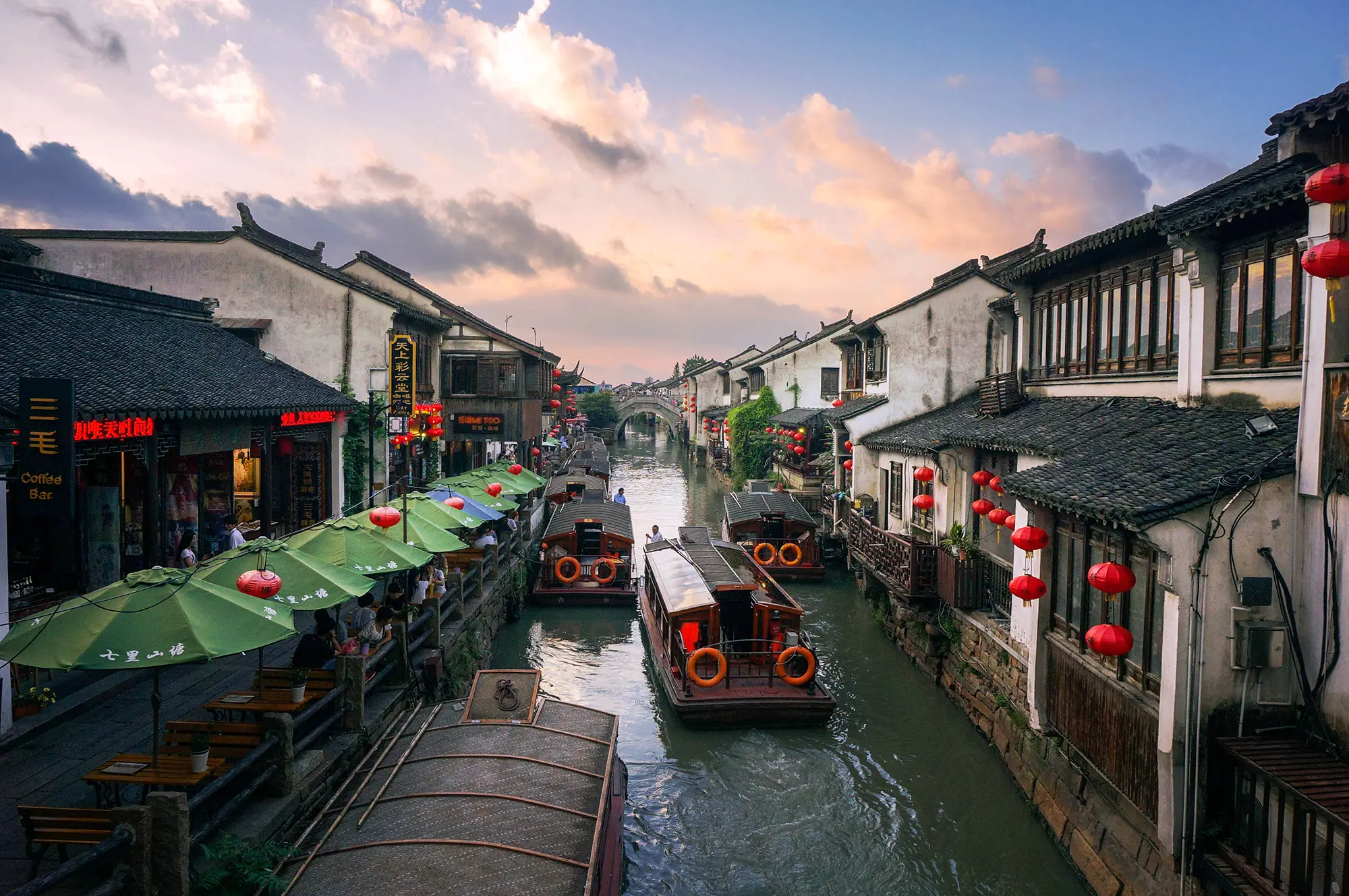
Suzhou is renowned as the 'Eastern Water City,' with crisscrossing rivers and numerous bridges within the city. Bai Juyi's 'Green waves flow east, west, south, and north, red railings over 390 bridges' vividly portrays this scene. The entire city is renowned for its classical gardens, and its gentle and elegant Jiangnan charm captivates visitors.
Classical gardens
Suzhou's classical gardens have nine sites listed as World Cultural Heritage sites, representing the pinnacle of private gardens in Jiangnan. The Humble Administrator's Garden is the largest classical garden in Suzhou, covering about 52,000 square meters. Centered around water, pavilions and towers are built along the water, with scenic spots like Yuanxiang Hall and Lotus Breeze Four-Sided Pavilion offering views year-round. It is hailed as the mother of Chinese gardens. Lingering Garden is renowned for its exquisite architectural layout. Guanyun Peak is the largest Taihu stone in Jiangnan gardens, with its thin, wrinkled, and see-through stones, truly a mark of history. Renowned at home and abroad as a paradise on earth, it is one of China's first national historical and cultural cities, and also the birthplace and core inheritance site of Wu culture. Cut off. Tiger Hill is renowned as 'the most scenic spot in Wu.' The great Song dynasty writer Su Dongpo wrote the timeless line, 'If you go to Suzhou and do not visit Tiger Hill, it would be a pity.' The Yunyan Temple Pagoda is one of the oldest existing leaning pagodas in China, and Sword Pool is said to be the place where King Helü of Wu buried his sword. Lion Grove is famous for its rockeries and layered rocks, with deep caves and valleys, making walking through it feel like entering a maze. Canglang Pavilion is the oldest surviving garden in Suzhou, built by Su Shunqin of the Northern Song Dynasty. Outside the garden is a pool of clear water, and inside the garden, thousands of stalks of green bamboo stalks, creating a simple and tranquil atmosphere.
A water town ancient town
Suzhou is surrounded by ancient water towns, which are the essence of Jiangnan's water town charm. Zhouzhuang is known as "China's Number One Water Town," surrounded by water on all sides, requiring boats to travel within short distance. Shuangqiao is famous worldwide for Chen Yifei's paintings, and Ming and Qing residences such as Shen Ting and Zhang Ting are well preserved. Tongli is famous for its "small bridges, flowing water, and homes." The river within the ancient town forms the shape of the character "川" (川), Tuisi Garden is a model of small gardens, and the three bridges (Taiping Bridge, Jili Bridge, Changqing Bridge) are the core landmarks of local wedding customs. Luzhi is one of the six major ancient towns in Jiangnan. The Tang dynasty wall sculpture of Arhats inside Baosheng Temple is a treasured art, and the town is densely packed with bridges, earning it the reputation of 'three steps and two bridges.' These ancient towns still host indigenous people, washing clothes by the river in the morning and curling smoke from cooking in the evening—the authentic daily life of a water town is truly moving.
Historic districts and ancient temples
The Pingjiang Road Historic District is the best-preserved ancient city district in Suzhou, continuing the layout of the city streets dating back to the Tang and Song dynasties. Bluestone roads stretch along the river, with white walls and black tiles on both sides. The sound of Pingtan music drifts from teahouses, blending the fragrance of books and tea. Shantang Street was dredged and excavated by Tang dynasty poet Bai Juyi when he served as the governor of Suzhou. It stretches about seven li from Changmen in the east to Tiger Hill in the west, and is renowned as the "Number One Street in Suzhou." At night, lanterns are lit and painted boats pass by, evoking the gentleness of Jiangnan. Hanshan Temple became famous worldwide because of the timeless masterpiece by Tang poet Zhang Ji: "Outside Suzhou city, the midnight bell rings to the traveler's boat." Every New Year's Eve, when the bell rings, thousands listen to pray for blessings and welcome the new year.
Intangible cultural heritage and silk
Suzhou is the birthplace of Suzhou embroidery, and together with Xiang, Shu, and Yue embroidery, it is known as one of China's four great embroideries. It is renowned for its fine stitching and elegant colors, with double-sided embroidery being a true specialty. Suzhou silk has a long history, having been a tribute since the Tang and Song dynasties. Today, you can still witness the entire process from sericulture to brocade weaving in person at the Silk Museum. Kunqu originated in Kunshan, Suzhou, and has been listed by UNESCO as a representative work of the Oral and Intangible Heritage of Humanity. It is hailed as the "ancestor of a hundred operas," with its melodious Shuimo style expressing the charm of Jiangnan. Pingtan is a part of daily life for Suzhou residents: when the three-stringed pipa plays, Wu dialects speak softly, and half a day passes in teahouses with a book and a cup of tea.
A food paradise
Suzhou is the core representative of Suzhou cuisine, known for its meticulous attention to detail and fresh flavors. Squirrel Mandarin Fish is the signature dish of Suzhou cuisine, shaped like a squiril—crispy on the outside, tender inside, with a sweet and sour taste. Biluo shrimp is stir-fried with live Taihu shrimp and Biluochun tea juice, resulting in a fragrant, tender aroma. When the eel paste is served with hot oil, it sizzles and fills with garlic aroma. Marinated pork with fresh spring bamboo shoots, salted meat, and fresh meat are slow-cooked to create a rich and flavorful soup. Suzhou-style noodles are a favorite among Suzhou locals. Yangchun noodles, Aozao noodles, and Tuhuang oil noodles each have their own distinctive flavors, with clear broths and chewy noodles, and a variety of toppings. Suzhou-style pastries such as plum blossom cake, crabapple cake, date paste sesame cake, autumn fresh meat mooncakes, and spring qingtuan are all flavors of the four seasons. Suzhou people love tea. Biluochun is one of China's top ten famous teas, produced in Dongting Mountain of Taihu Lake. It is renowned for its beautiful shape, bright color, rich aroma, and mellow taste. A cup of spring tea paired with a plate of snacks is the most pleasant afternoon for Suzhou locals.
Suzhou's charm lies in the perfect blend of refinement and ease. Here, you can enjoy the changing scenery of World Heritage-level gardens as you walk and the daily warmth of small bridges, flowing water, and homes. From the grand city of Helü to the elegance of the Tang and Song dynasties, from the prosperity of the Ming and Qing dynasties to today's new appearance, Suzhou has never stopped writing the beauty of Jiangnan. This is a city worth slowing down and feeling with your heart—every meal is poetic, and every morning and evening, sunny or rainy, has its own charm.
Sample route
Suzhou: 2-3 nights
- Arrive with riverside dinner
- Gardens and old alleys
- Take a leisurely day strolling through the neighborhood or water town
- Morning market and return journey