In depth
Jiuzhaigou is located in Jiuzhaigou County, Aba Tibetan and Qiang Autonomous Prefecture, Sichuan Province. It is named after the nine Tibetan villages within the valley. Located deep within the Minshan Mountains on the southeastern edge of the Qinghai-Tibet Plateau, it is world-famous for its six wonders: the sea of emerald, cascading waterfalls, colorful forests, snowy peaks, Tibetan sentiment, and blue ice. In 1992, it was listed as a World Natural Heritage Site and holds multiple titles such as a World Biosphere Reserve and a National 5A-level Tourist Attraction, earning it the reputation of a fairyland on earth and a fairy tale world.
Nine fortresses and six unique forts
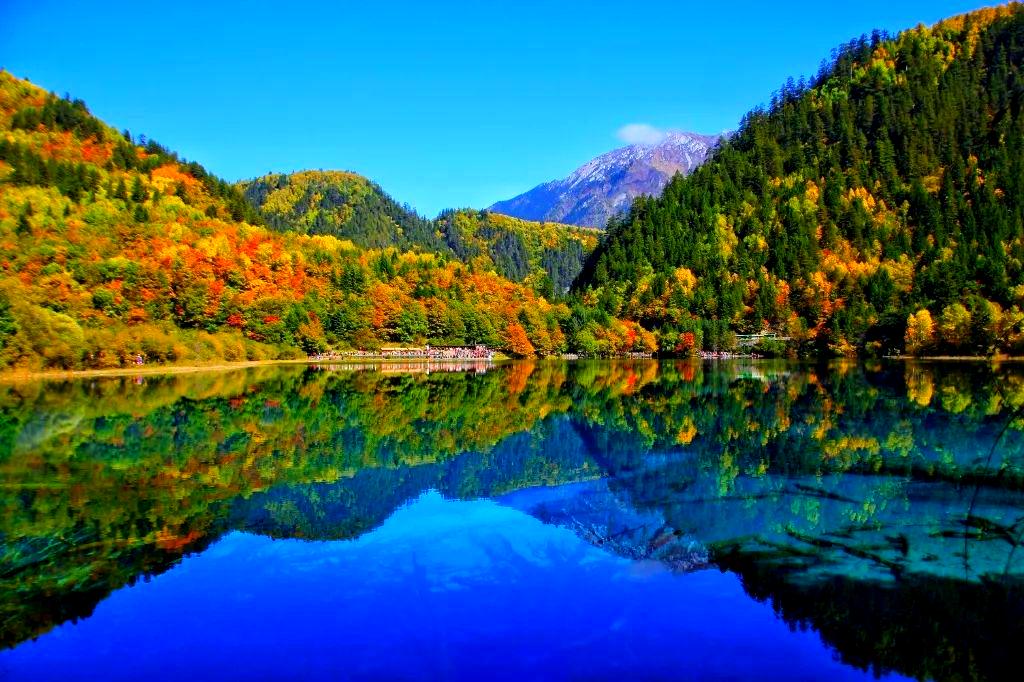
The sea of green is the soul of Jiuzhaigou. Within the valley are 108 alpine lakes, locally known as Haizi. The lake water is rich in calcium carbonate, displaying vibrant colors such as blue, green, and yellow, crystal clear, with dead trees sunk to the bottom clearly visible. The Five-Color Pool is the smallest lake in Jiuzhaigou, yet it is the most dazzling. Under sunlight, the water displays five colors: blue, green, yellow, and purple. Wuhuahai is renowned as the unique wonder of Jiuzhai, where travertine deposits and algae coexist at the lakebed, dazzling like peacocks spreading their tails. The Mirror Sea is like a giant mirror, reflecting the shadows of snowy mountains and clouds; when there is no wind, heaven and earth are hard to distinguish.
The layered waterfalls are the passion of Jiuzhaigou. Nuorilang Waterfall is China's widest highland travertine waterfall, 270 meters wide and 24.5 meters high. The torrent cascades down cliffs with a grand force, and its name means 'male god' in Tibetan. Pearl Beach Waterfall was the filming location for the ending theme of the 1986 version of "Journey to the West," where the water splashes across the travertine beach like rolling pearls and sparkling silver in the sunlight. Shurin Waterfall is nestled among ancient trees, where water and trees thrive together, creating a unique rustic charm.
Colorful forests unfold an autumn painting. Jiuzhaigou has a forest coverage rate as high as 63.5%, with more than 2,000 plant species. Every golden autumn, birch trees turn golden, maples blaze red, and spruces are lush green, coloring the forests in layers, blending beautifully with the clear waters and snowy mountains. It is hailed as the most beautiful season in Jiuzhaigou.
The snowy peaks and blue ice give Jiuzhaigou a more three-dimensional texture. Inside the valley, the main peak of the Minshan Mountains, Xuebaoding, is over 3,000 meters above sea level, standing tall and proud. In winter, the waterfall freezes into ice, and the blue ice landscape is crystal clear, shimmering with a deep blue glow under the sunlight—breathtakingly beautiful.
Three major valleys
Jiuzhaigou is distributed in a Y-shape and consists of three main gullies. Shuzhenggou is the main gully from the entrance to Nuorilang Waterfall, featuring Bonsai Beach, Reed Sea, and Wolong Lake. Shuzhengzhai is the largest Tibetan village in the valley, with white pagoda prayer flags fluttering in the wind. Rize Valley is a Y-shaped right branch and is the essence of Jiuzhai, gathering the most famous scenic spots such as Wuhua Lake, Pearl Beach Waterfall, Panda Lake, and Arrow Bamboo Lake. Chawa Valley is a Y-shaped left branch, extending from Nuorilang Service Center to Changhai, about 18 kilometers long. Changhai is the highest elevation (about 3100 meters) and largest lake in Jiuzhaigou, with towering snow-capped mountains at its end, deep blue water, and frost-free throughout the year. Within the valley, a sightseeing bus + hiking model is implemented; eco-friendly shuttle buses shuttle between the three valleys, and the walking boardwalk makes it easy for visitors to explore each scenic spot.
Tibetan culture
The name Jiuzhaigou comes from nine Tibetan villages within the valley, where Tibetan culture is deeply rooted. In villages like Shuzheng Village and Heyezhai Village, colorful prayer flags, white pagodas, and mani piles can be seen everywhere. Tibetans have lived in harmony with the mountains and rivers for generations, worshipping mountain and water gods. Every year on the fifteenth day of the first lunar month, the entire valley Tibetans circle around the sacred mountain to pray for blessings. Zharu Monastery is the most important Tibetan Buddhist temple in Jiuzhaigou, where visitors can experience the mystery and solemnity of Tibetan Buddhism.
Scenery of the four seasons
Jiuzhaigou has its own charm in every season. In spring, the ice and snow melt, azaleas bloom, and new green begins to bloom. Summer temperatures are cool, averaging 16-22°C, making it an excellent summer retreat, with waterfalls with abundant water being the most spectacular. Autumn is the peak season for Jiuzhaigou; in mid to late October, the forests are fully colored, and the colors of Haizi reach their peak, making it a paradise for photography enthusiasts. In winter, Jiuzhaigou transforms into a kingdom of ice and snow, with few tourists, and the blue ice and snowy scenery create a tranquil fairy-tale world.
Travel tips
Jiuzhaigou is at an altitude between 2,000 and 4,500 meters, with the highest point at Changhai at about 3,100 meters. Most visitors do not experience severe altitude sickness, but strenuous exercise should still be avoided. Food and accommodation within the valley are limited, so it is recommended to stay in Zhangzha Town at the mouth of the valley. Tickets require real-name reservation, are limited daily, and plan ahead during peak seasons.
The charm of Jiuzhaigou lies in nature's purest colors and the most enchanting water charm. The water here is alive—it can sing, dance, and change color; The mountains here are tranquil, guarding this pure land day after day for thousands of years. There is a saying: 'After returning from Jiuzhai, you don't look at the water'—this phrase perfectly captures Jiuzhaigou's irreplaceable place in the hearts of travelers. No matter the season, Jiuzhaigou awaits every pilgrim from afar with its unique beauty.
Sample route
Jiuzhaigou: 3-4 nights
- Arrive and adapt to the valley
- Complete tour of Jiuzhaigou
- Nearby slow driving or return transfers