In depth
Huangshan, formerly known as Yishan, is located in the southern part of Anhui Province and is named after legends about the Yellow Emperor refining elixirs here. It is famous worldwide for its five wonders: strange pines, strange rocks, sea of clouds, hot springs, and winter snow. In 1990, it was listed as a World Cultural and Natural Heritage site and is renowned as the world's most extraordinary mountain. Ming dynasty traveler Xu Xiake praised: "Among the famous mountains at home and abroad, none compare to Huangshan in Huizhou." "The entire mountain is rugged with overlapping peaks, with seventy-two peaks scattered at varying heights. Among them, the three main peaks—Lotus Peak, Bright Summit, and Tiandu Peak—all exceed 1,800 meters in elevation, majestic and spectacular.
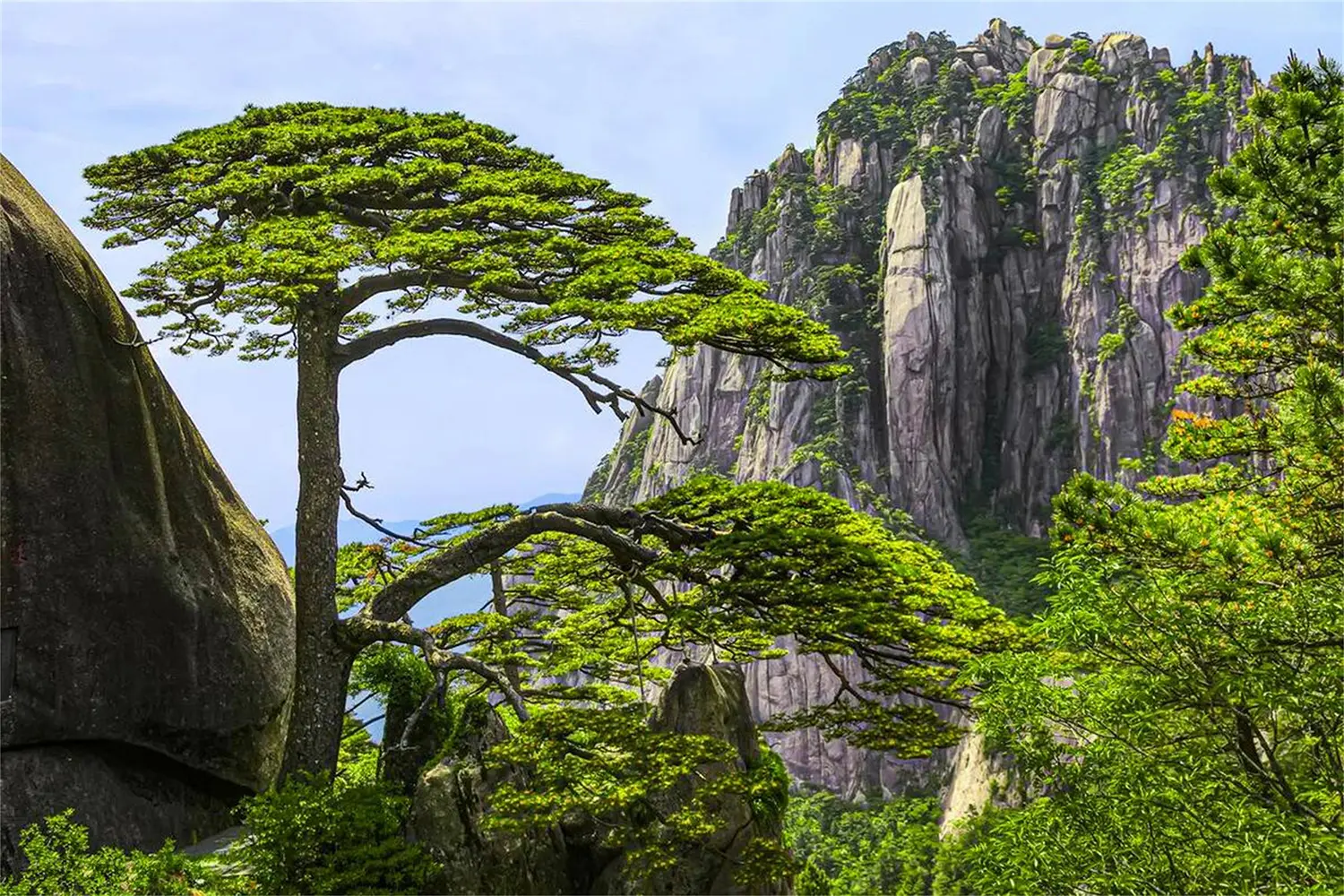
Strange pine. Huangshan pine is a unique tree species in Huangshan, rooted atop sheer cliffs and forming a variety of forms. The Welcoming Pine is a symbol of Huangshan, standing beside Yuping Tower. It is over a thousand years old, with one side branch stretching out into the air, warmly welcoming guests from all directions. Famous pines such as the Guest Pine, Guest Companion Pine, and Harp Pine each have their own charm; their needles are lush and green, and their branches twist and curve, creating a charming contrast with the rocks.
Strange rocks. Huangshan's strange rocks are scattered like stars, famous for their resemblance in shape and spirit. Feilai Stone is about 12 meters tall and weighs 360 tons, suspended alone on a giant boulder as if it had flown from beyond the sky. The Monkey Gazing at the Sea resembles a stone monkey sitting atop a mountain, gazing at the sea of clouds. Strange stones such as Dream Brush Flowers, Immortal Points the Way, and Ao Fish Carrying Golden Tortoise are lifelike, with every step shifting shape and scenery, leaving visitors in awe.
Sea of Clouds. Huangshan's sea of clouds is the most ever-changing of the Four Wonders. Whenever the weather clears after rain or after winter snow, clouds and mist rise from the valleys, surging like the sea, with mountain peaks appearing faintly like the fairy island of Penglai. The Xihai Grand Canyon is the best place to view the sea of clouds. The canyon is deep and secluded, with surging clouds. Visitors weave along the suspended boardwalk, as if walking on clouds. Guangmingding is flat and open, making it an excellent spot to watch the sunrise and admire the sea of clouds.
Hot springs and winter snow. Huangshan Hot Spring's water is pure and rich in minerals, with an annual temperature around 42 degrees Celsius. Known as a spiritual spring, soaking in the spring after hiking can relieve fatigue. Winter snow is Huangshan's fifth wonder. After the snow, the mountain is covered in silver, with rime crystals and ice hanging from the sky. At sunrise, golden sunlight pours over the icy world, creating a serene and sacred beauty.
History and culture. Huangshan is a sacred site of Taoism, with legends of the Yellow Emperor Xuanyuan refining elixirs here. To this day, relics such as Alchemy Peak and Immortal's Cave remain here. There are numerous cliff carvings on the mountain, and countless literati and poets throughout history have composed and composed them. Ancient temples such as Ciguang Pavilion, Banshan Temple, and Wenshu Monastery are nestled among the woods, with Buddhist chants lingering. The Huangshan School is also an important school of Chinese landscape painting, represented by Jianjiang and Shitao, who emulate authentic Huangshan landscapes and pioneered a new trend.
Surrounding Huiyun. At the foot of Huangshan lies the core area of Huizhou culture. Hongcun and Xidi are listed as World Cultural Heritage sites. Huizhou-style residences with white walls and black tiles are arranged in a harmonious manner, and the Shuikou Garden complements ancient bridges and flowing water, earning it the reputation of a picturesque countryside. Tunxi Old Street is a living scene of Along the River During the Qingming Festival, lined with tea shops, the Four Treasures of the Study, and Huizhou pastry shops, exuding a strong commercial and cultural atmosphere. Dishes like stinky mandarin fish, hairy tofu, and Huizhou Yipin Pot in Huizhou cuisine are especially distinctive.
Mountaineering experience. To climb Huangshan, you can choose to take the cable car from Yungu Temple or hike from Ciguang Pavilion, passing by Banshan Temple and the Golden Rooster Heavenly Gate. Although it's tough, the scenery is endless. Accommodations on the mountain include Beihai Hotel and Paiyun Tower. Overnight stays on the mountaintop offer views of the vast Milky Way, greeting the first rays of dawn at dawn—a scene unforgettable for a lifetime.
The charm of Huangshan lies in the perfect blend of nature's craftsmanship and cultural heritage. Here, you can enjoy breathtaking natural scenery and a rich Huizhou culture, with scenery all year round—azaleas cover the mountains in spring, waterfalls and flowing springs in summer, red leaves like rosy clouds in autumn, and frost hanging in winter. No matter when you visit, Huangshan will greet you with a different face—it's a must-visit mountain in China.
Sample route
Huangshan: 2-3 nights
- Upon arrival, rest at the foot of the mountain
- A complete day in Huangshan
- Easily descend the mountain and the surrounding villages